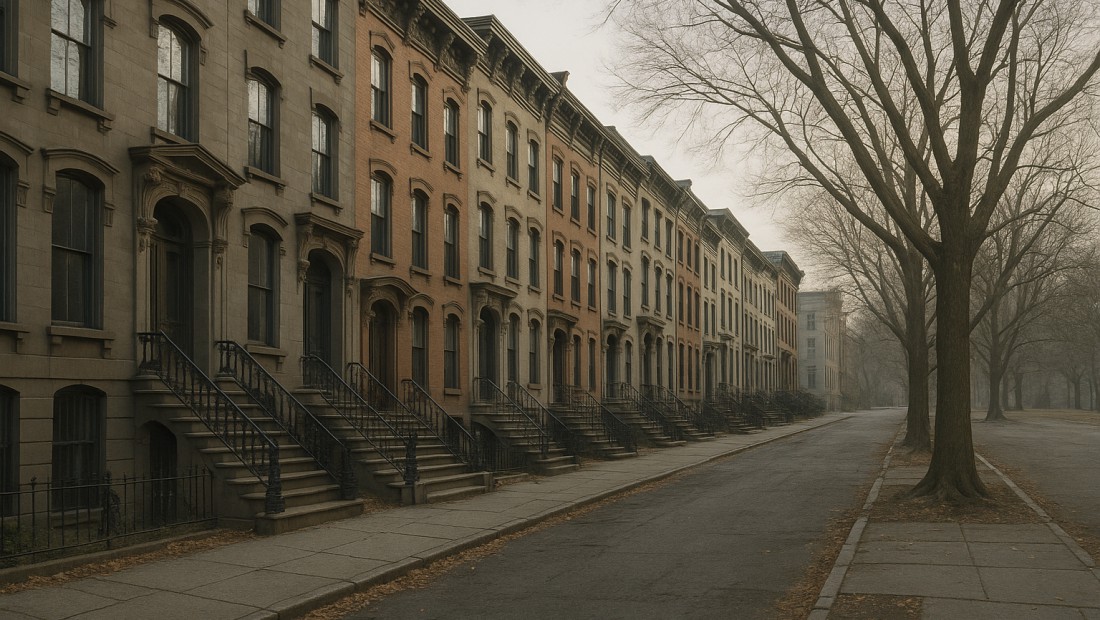
Center Square is the postcard version of Albany: tree-lined streets of brick and brownstone row houses, many built between the 1850s and the 1890s, wrapped around Washington Park and a short walk from the Capitol. The neighborhood's character is its plumbing's challenge. These homes were built when drains were laid in clay tile and cast iron, and a century and a half later those materials are still in the ground under the sidewalk and the street.
If you own or rent in Center Square, the drains you use every day likely run through pipe that is older than the automobile. That doesn't mean it's failing — well-built clay and cast iron can last generations — but it does mean the line is more vulnerable to the specific problems that come with age, tree roots, and Albany winters.
What we see in Center Square homes
- Root intrusion: the mature trees that make the neighborhood gorgeous send roots straight toward the moisture and nutrients in old clay joints.
- Offset and cracked clay: 130-year-old vitrified clay tile shifts at the joints, letting roots in and soil out, which leads to bellies and partial collapses.
- Scaled cast iron: interior stacks and branch lines in cast iron build up a rough scale that snags everything and narrows the pipe.
- Shared and party-wall complications: row houses sit shoulder to shoulder, and laterals sometimes run in tight, awkward configurations.
- Basement floor drains: nearly every row house has a basement, and its floor drain is the lowest opening — the first place a main-line backup shows.
Cleaning old lines without damaging them
The wrong approach can do real harm to a century-old drain. Aggressive cabling in fragile clay can crack tile that had years left; harsh chemical cleaners eat at old pipe and do nothing about roots. Our approach on these blocks is to diagnose before we cut. A camera inspection tells us exactly what the pipe is made of, where the roots or the belly sit, and whether the line needs a careful cleaning or a repair. From there we match the tool to the pipe.
- Camera first. We see the material, the joints, and the trouble spot before any tool goes in.
- Right-sized cabling or jetting. For roots and grease we choose between a cable and controlled hydro jetting based on the pipe's condition.
- Root management. Where roots keep returning, we discuss root removal and a maintenance interval that fits an old clay line.
- Trenchless repair when needed. If the tile is failing, trenchless lining can rebuild the pipe from the inside with minimal digging.
Winter on these blocks
Center Square's older homes often have less-insulated basements and exterior walls that predate modern building code. That makes frozen drain lines and frozen vent stacks a real winter risk, particularly in vacant units or rooms kept cool. A frozen drain or vent can stop a whole stack from flowing or draining, and the fix is more involved than a summer clog. We respond to these calls through the cold months.
Who pays for the lateral
In Albany, the sewer lateral — the pipe from your house to the city main — is the homeowner's responsibility, including the portion under the sidewalk and out to the connection. For Center Square owners that's worth knowing before a problem becomes an emergency: a failing clay lateral under a historic sidewalk is a repair you'll want to plan, not discover at 11 p.m. A camera inspection is the cheapest way to know where you stand.
Local, licensed, and used to old houses
We work across Albany every week, and the historic core is a big part of that. We know what a Center Square row house plumbing system looks like before we walk in the door, we carry equipment sized for old and narrow lines, and we hold New York master-plumber licensing. Whether it's a slow kitchen drain in a third-floor flat or a root-choked lateral under the sidewalk, we can clear it and tell you honestly what the pipe needs next.
Call 518-818-6837 or request a free quote and we'll get a licensed pro to your Center Square address — fast when it's an emergency, scheduled when it's not.