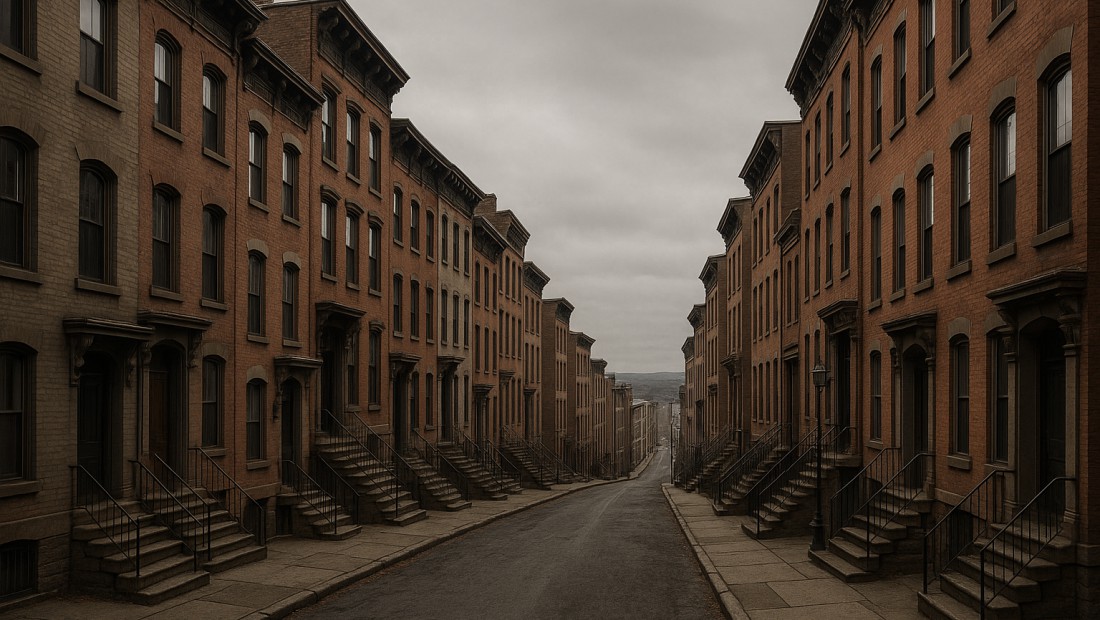
Troy, the Collar City across the Hudson from Albany, has one of the most intact collections of 19th-century architecture in the country — and one of the oldest plumbing infrastructures to match. Its dense brick row houses, built largely between the 1840s and 1900, sit on original or near-original drain lines, and the city's combined sewer system adds a wrinkle you don't see everywhere.
What makes Troy drains challenging
- Very old pipe: clay-tile laterals and cast-iron stacks dating back well over a century.
- Dense row-house layouts: shared walls and tight lots that complicate access to lines.
- Combined sewers: much of Troy carries storm and sanitary flow in the same pipes, so heavy rain and snowmelt can surcharge the system and back water up toward low fixtures.
- Hillside grades: the city's steep topography puts unusual loads on some laterals.
- Basement backups: with combined-sewer surcharge, the basement floor drain is the first place water re-enters a Troy home.
Cleaning century-old lines carefully
Like Albany's historic core, Troy's old pipe demands a careful hand. We diagnose before we clean so we don't crack fragile clay or tear apart a corroded cast-iron joint.
- Camera first. See the material, the joints, the roots, and any breaks.
- Match the tool. Right-sized cabling or controlled jetting based on the pipe's condition.
- Handle roots. Root removal for the intrusion that old clay joints invite.
- Repair the failing sections. Trenchless lining rebuilds old pipe with minimal digging in tight historic streets.
Winter in the Collar City
Troy's hillside row houses, many with century-old exterior walls and cool basements, are prone to frozen drains and vent stacks in deep cold. A frost-closed vent or a frozen branch can stop a stack from working entirely. We respond to these calls all winter across the city.
Who owns the lateral
As in Albany, the sewer lateral from a Troy home to the city main is the property owner's responsibility. For a row house with a century-old clay lateral under a busy street, that's worth understanding before trouble strikes. A camera scope tells you the pipe's real condition so you can plan rather than react.
Old-house specialists across the river
We work in Troy regularly and we're comfortable with its historic housing stock, its combined sewers, and its steep streets. We camera-inspect before recommending work, we favor trenchless repair in tight historic blocks, and we hold New York master-plumber licensing. For a fast clear or a straight read on an old line, call 518-818-6837 or request a free quote.