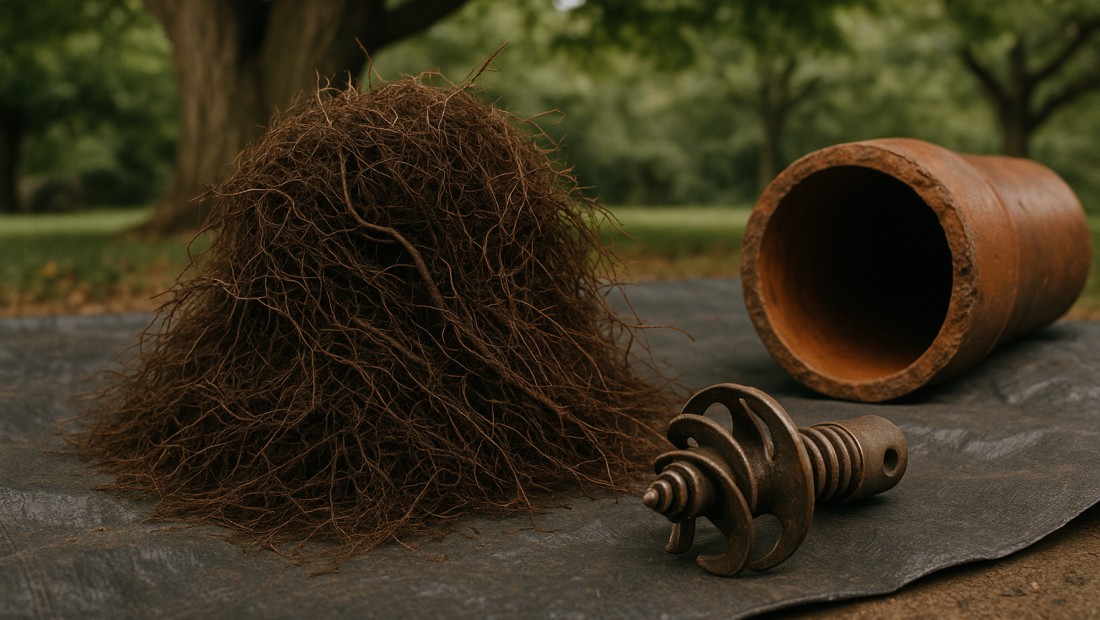
Drive through Pine Hills, Delmar, or the older streets of Troy and Schenectady and you're under a canopy of mature trees — one of the best things about living here. Underground, those same trees are the leading cause of sewer-line failure in the Capital Region. Tree roots seek water and nutrients, and a sewer lateral is full of both. Wherever an old clay or cast-iron joint has loosened — and decades of freeze-thaw guarantees they have — hair-fine roots find the gap, slip inside, and then grow.
Once inside, a root doesn't stay small. It branches into a dense, hair-like mat that catches everything flowing past — toilet paper, grease, debris — until the pipe chokes. The classic sign is a sewer that backs up on a regular schedule, often worse in spring when roots grow fastest and the ground is wet.
How roots get in
- Loose joints in old clay and cast-iron pipe — the most common entry point, widened by years of soil movement.
- Cracks from freeze-thaw and settling.
- Deteriorated Orangeburg — the soft pipe is easily penetrated as it fails.
- Leaking connections at the house or the street tap.
How we remove roots
- Confirm with a camera. A camera inspection shows where the roots are entering and how far the intrusion extends.
- Cut them mechanically. A powered machine with a root-cutting head shears the roots back to the pipe wall and restores full flow.
- Jet the line. Hydro jetting flushes out the cut root debris and cleans the wall thoroughly.
- Discuss prevention. Because the entry point remains, we talk through treatment and longer-term options so the roots don't simply grow back.
Cutting buys time; it isn't a cure
Here's the honest truth other contractors sometimes skip: cutting roots clears the line, but the crack or joint that let them in is still there, and the tree is still alive and thirsty. Roots grow back — often within a year or two. So root cutting is best understood as either ongoing maintenance (cut on a schedule to stay ahead of regrowth) or a stopgap while you plan a permanent fix. The permanent fix is to repair or replace the compromised section of pipe so roots have nowhere to enter.
Permanent solutions
When roots keep coming back, the durable answer is to eliminate the entry point. For a localized crack or joint, a trenchless spot repair or pipe lining seals the pipe from the inside without digging up the yard or cutting down the tree. For a line with many entry points or extensive damage, full replacement — increasingly via trenchless methods — gives you a seamless new pipe roots can't penetrate. We'll show you the camera footage and lay out which approach fits your line and budget.
If your sewer backs up every spring, roots are the likely culprit. We'll cut them out to get you flowing again and give you a clear-eyed plan to stop the cycle — without insisting you remove a tree you love.