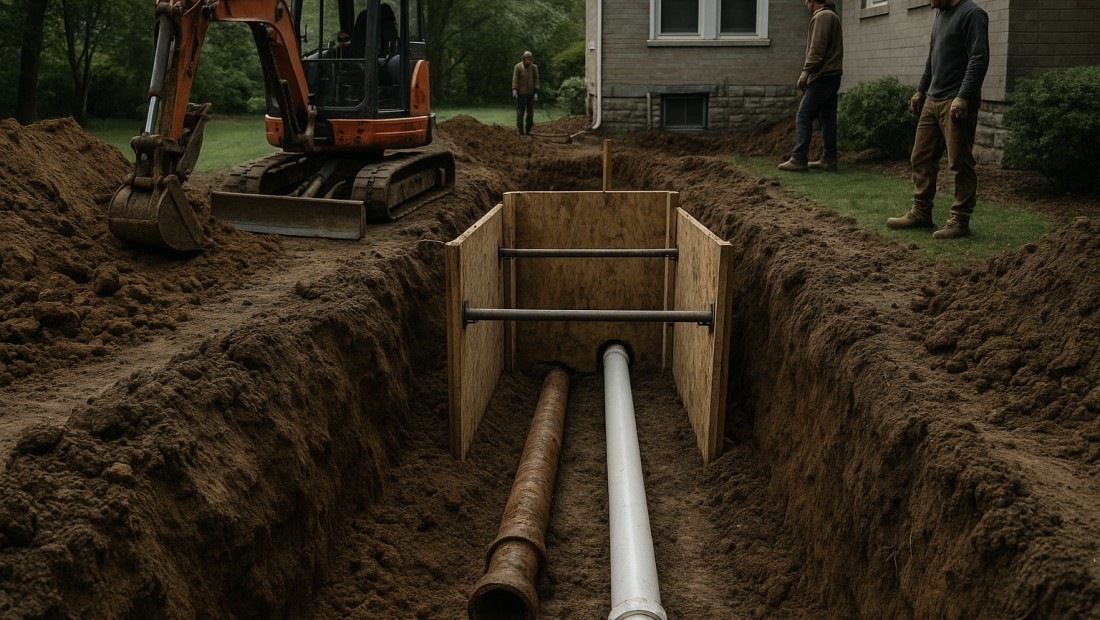
Replacing a sewer lateral is one of the larger plumbing projects a homeowner faces, and it's not a decision to rush. But for a line that has genuinely failed — collapsed, riddled with root entry points, or made of Orangeburg that's deforming along its length — replacement is the only fix that actually lasts. Cleaning and spot repairs on a line that bad are money spent to postpone the inevitable.
The good news: a properly installed new lateral, in modern PVC or HDPE, is good for many decades and immune to most of what plagues Albany's old pipe. The goal is to replace only when it's truly warranted, install it right, and do it with the least disruption your property allows.
When replacement is the right answer
- Collapsed pipe — a section has caved in and no longer carries flow; cleaning can't fix a pipe that isn't there.
- Failing Orangeburg — the tar-paper pipe is deforming along its whole length, not just at one spot.
- Extensive root damage — so many entry points that lining or spot repair won't keep up.
- Severe bellies and back-pitch — the line's grade is wrong and water no longer flows by gravity.
- Repeated failures — you've cleaned and patched it again and again and it keeps failing.
Trenchless vs. traditional replacement
Wherever the line's condition allows, we favor trenchless replacement — typically pipe bursting, which pulls a new line through the old path while fracturing the old pipe outward. It spares your lawn, walks, trees, and driveway. But some situations require traditional open-trench excavation: severe grade problems that need the line re-pitched, certain collapses, or complex connections. We assess which your line needs and explain the trade-offs in plain terms.
- Inspect and plan. We camera and locate the line, define the failure, and determine whether trenchless or open excavation fits.
- Handle permits and locates. Replacement involves municipal permits and utility mark-outs; we manage that process.
- Replace the line. We install new PVC or HDPE pipe at the correct grade, trenchless or traditional as the situation requires.
- Inspect and restore. A final camera pass confirms the new line, and we restore the work area.
Permits, codes, and the right to do it once
Sewer replacement in the Capital Region requires permits, inspections, and work performed to the New York State Uniform Code by appropriately licensed plumbers, with utility locates before any digging. This isn't red tape to dread — it's what ensures the line is installed at the correct depth below the frost line, at the right pitch, with proper connections, so you never have to do it again. We handle the paperwork and the inspections as part of the job.
An honest recommendation
Replacement is the right call sometimes and overkill other times. Our job is to tell you which — backed by camera footage you can see for yourself. If your line can be cleaned, lined, or spot-repaired for years of good service, we'll say so. If it's genuinely failed, we'll show you why and give you straightforward options and pricing for replacing it properly. Either way, you make the decision with the evidence in front of you.
If you've been told you need a new sewer line, or your old lateral keeps failing despite repairs, let's camera it and talk through what's really going on.