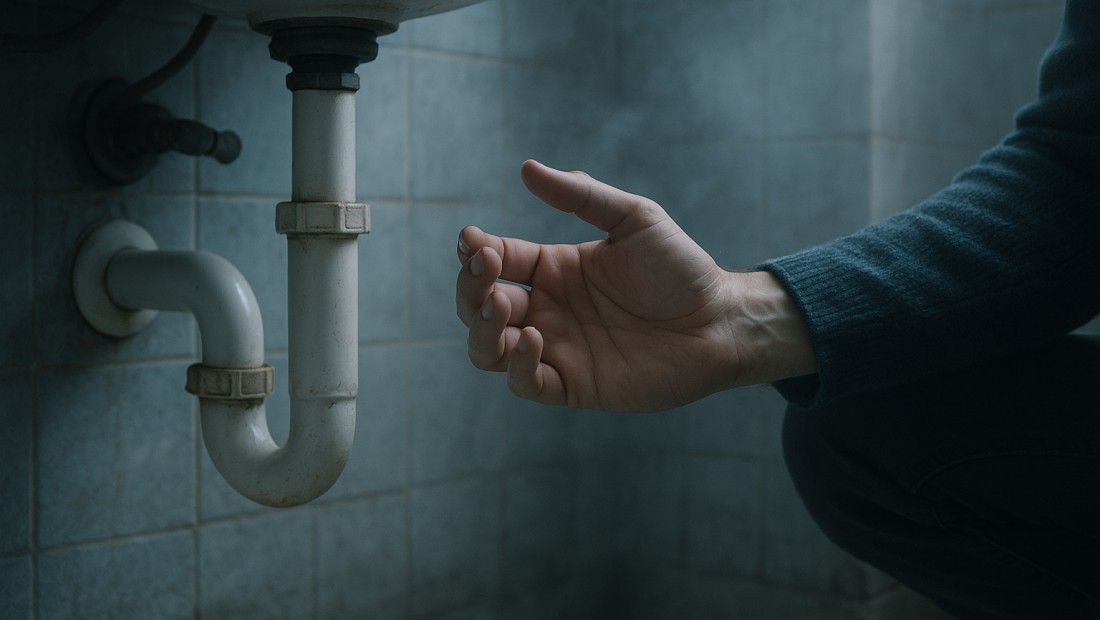
Your plumbing is designed to keep sewer gas where it belongs — in the pipes and out of the house. Two features do this: water-filled traps under every fixture that block gas from rising, and a vent system that carries gas up and out through the roof. When you smell sewer gas indoors, one of those defenses has failed somewhere. Finding where is mostly a process of elimination, and the usual suspects are reassuringly fixable.
The most common cause: a dried-out trap
Every drain has a trap — a U-bend that holds a little water to seal out sewer gas. If a fixture goes unused, that water evaporates and the seal breaks, letting gas drift up. The prime culprits in Albany homes are basement floor drains (the basement stays cool and the drain rarely runs), guest-bathroom fixtures, and floor drains in laundry rooms. The fix is almost comically simple: pour a gallon of water down the drain to refill the trap. A splash of mineral oil on top slows future evaporation.
Other causes we check
- A failed wax ring under a toilet — a loose or leaking seal lets gas escape around the base, often with a faint smell that's worse near the floor.
- A frozen or blocked vent stack — when the vent can't carry gas out, it backs into the house; in winter, suspect a frozen vent.
- A cracked or leaking drain pipe in a wall, under the floor, or in the basement — especially in older homes with aging cast iron.
- A blockage in the line causing gas to back up through fixtures.
- A missing or improper cleanout cap letting gas escape directly.
When the smell is a health concern
Sewer gas is mostly methane and hydrogen sulfide — the rotten-egg smell. At the low levels typical of a dried trap it's a nuisance more than a danger, but a strong, persistent smell shouldn't be ignored, and a sewage smell paired with a backup means you're dealing with actual wastewater, which is a genuine biohazard. If the smell is strong and you can't locate a dried trap, ventilate the area and call us to track down the source.
How we find the source
- Rule out dried traps. The fastest, most common fix — we refill and observe.
- Check toilets and seals. We inspect wax rings and fixture connections for leaks.
- Test the vents. We confirm the vent system is open and carrying gas out, including checking for a frozen or blocked stack.
- Inspect the lines. If needed, a camera finds cracks, breaks, or blockages releasing gas.
Track it down before it lingers
A sewer smell is your plumbing telling you a seal has broken somewhere. Start with the free fix — water down every floor drain and unused fixture — and a good share of cases end there. If the smell persists, it's worth finding the source rather than masking it, because the remaining causes (a failed seal, a cracked pipe, a venting problem) only get worse. We're good at chasing these down quickly; give us a call if the smell won't go away.