What Your Drains Are Telling You
Drains rarely fail without warning. Learn to read the early signs and you can schedule an affordable cleaning instead of mopping a flooded basement on a sub-zero night.
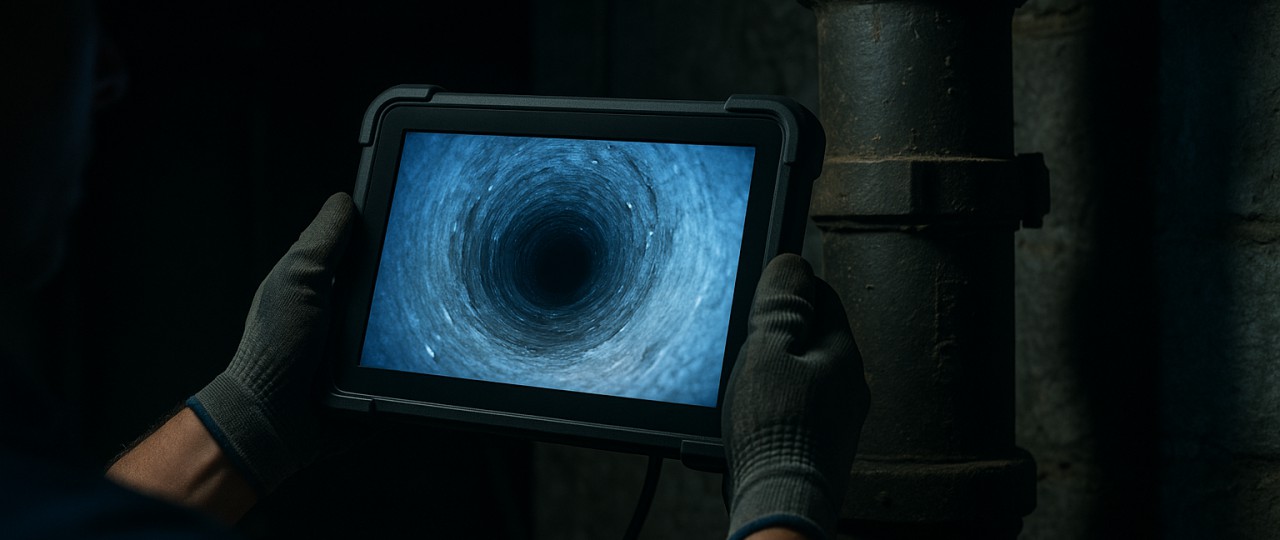
Most drain emergencies announce themselves days or weeks ahead of time, in signs that are easy to dismiss: a sink that empties a little slower, a glug from the toilet when the washer drains, a faint sewer odor in the basement on a cold morning. Each is your plumbing telling you something. Learn to read them and you turn a 2 a.m. backup into a routine weekday service call — and in this climate, you may also catch a problem before a freeze turns it into a burst.
This section is a field guide to those signals. Each page explains what the symptom usually means here, when it’s a cheap local fix and when it points to the main line, and what to do next. The thread that runs through all of them: a symptom that keeps coming back is not bad luck — it’s a cause that hasn’t been found yet, and a camera inspection is how you find it.
The pattern matters more than the symptom
One slow fixture is usually a local clog. The same fixture slowing again and again means buildup or a defect. Several fixtures slowing together — especially the lowest ones — points past any single drain to the shared main line. Reading that pattern is the first diagnostic step, and it’s one you can do yourself before anyone picks up a tool.
Read the early warning signs
The signals a Capital Region home gives before a drain fails — what each one means and what to do.
Slow-Draining Sink or Tub
The most common early warning — and the cheapest stage to fix. When it’s local, and when it isn’t.
Learn more →Gurgling Drains
That glug is air escaping a restricted line — or, in winter, a frost-closed vent stack. Often the last warning.
Learn more →Sewer Smell in the House
Usually a dry trap — common in dry-air winters and seldom-used basement drains. How to track down the odor.
Learn more →Clogs That Keep Coming Back
Why snaking the same drain again isn’t the answer — and what actually ends the cycle.
Learn more →Multiple Drains Backing Up
Several fixtures failing at once is the clearest sign of a main-line problem. What to do.
Learn more →Basement Drain Backing Up
The lowest drain in the house overflows first — the classic Capital Region main-line and snowmelt warning.
Learn more →Frequently asked questions
Can I diagnose a drain problem myself?
You can get surprisingly far. Note which fixtures are affected, whether more than one fails together, when it started, and whether it tracks with cold snaps, heavy rain, or snowmelt. That pattern tells a pro a lot before they arrive — and tells you whether you’re facing a single clog or a main-line issue.
When is a symptom an emergency?
When sewage is backing up into the house, when every drain is affected at once, or when a line has frozen and may burst. A single slow drain can usually wait for a scheduled visit; the signs of a main-line or freeze problem should not.
Why do symptoms get worse in winter?
Cold does several things at once: it stiffens grease so it sets up faster in pipe, frost can seal a roof vent and starve drains of air (causing gurgling and slow flow), and freeze-thaw ground shifts buried lines. Dry indoor air also evaporates the water in seldom-used traps, letting sewer gas in.
Is a camera inspection worth it for a small symptom?
For a one-time clog, no — snake it and move on. For a symptom that keeps returning, it’s the smartest money you can spend: a camera finds the actual cause so you stop paying for repeat cleanings on a line that needs a real fix.
A backed-up drain won’t wait — especially in an Albany winter.
A slow drain on a freezing night can become a backup by morning. Get matched with a licensed Capital Region pro for a free assessment, any hour.