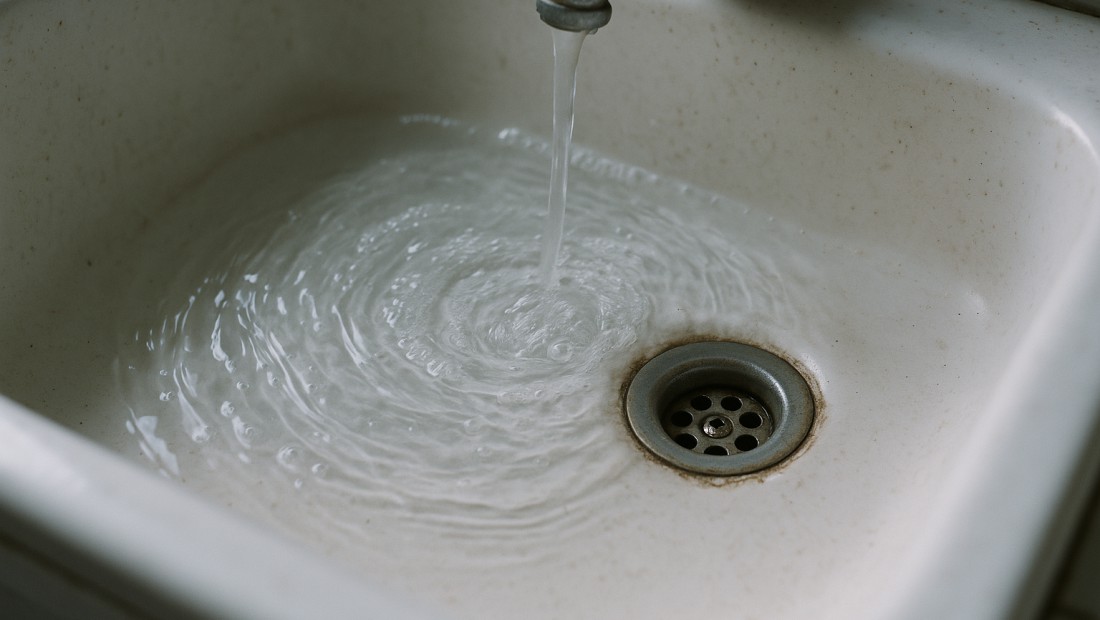
A slow-draining sink rarely arrives overnight. It creeps: water lingers a few seconds longer this week than last, then pools while you brush your teeth, then sits in the basin long after you shut the faucet. That gradual decline is buildup accumulating in the trap or the branch line, and it's the plumbing equivalent of a check-engine light — a chance to fix something small before it becomes a hard clog or a backup.
The cause depends on the sink. A kitchen sink slows from grease and food; a bathroom sink slows from hair, toothpaste, and soap scum. In older Albany homes, narrow original pipe and decades of scale make either type of buildup take hold faster.
Why one sink drains slowly
- Kitchen: grease congealing on the pipe wall, with food particles and coffee grounds caught in it.
- Bathroom: a hair-and-soap mat in the pop-up stopper, trap, and trap arm.
- Either: a partially blocked trap, an object lodged in the line, or scale in old galvanized or cast-iron pipe.
- Venting: a slow drain that "glugs" can signal a venting problem rather than a clog — sometimes a frozen vent stack in winter.
What you can try first
For a single slow sink, a few safe DIY steps often help. Clean the pop-up stopper or strainer — in bathroom sinks this alone solves a surprising share of slow drains. Flush the drain with a kettle of hot (not boiling) water to soften grease and soap. A plunger, with the overflow opening sealed, can shift a fresh clog. What we don't recommend is chemical drain cleaner: it struggles with the real causes, damages older Albany pipe, and creates a hazard for anyone who later has to open the line.
When to call
- The slow drain returns within days of clearing it yourself.
- Cleaning the stopper and flushing with hot water doesn't help.
- The water backs up rather than just draining slowly.
- You smell sewer gas, or the drain gurgles.
- More than one fixture is affected.
How we clear it
- Inspect the trap. We check and clean the P-trap and trap arm, where many slow-drain clogs live.
- Cable the branch. If the buildup is deeper, a small cable clears the branch line back toward the stack.
- Address the cause. For a grease-lined kitchen line that keeps slowing, we discuss jetting to clean the wall rather than just bore through.
- Check for a bigger issue. If the slow drain is part of a pattern, we look downstream rather than treating only the symptom.
Don't ignore the warning
A slow drain is genuinely good news in one sense: it's the problem at its most manageable. Clear it now — properly, not with a bottle of caustic gel — and you avoid the midnight backup later. If a single sink keeps slowing despite cleaning, there's a reason worth finding, and we can sort it out quickly. If several drains are slowing at once, treat it as more urgent and have the main line looked at before it stops entirely.
Give us a call for a slow drain that won't stay fixed; it's usually a fast, affordable visit that saves a much bigger one down the road.