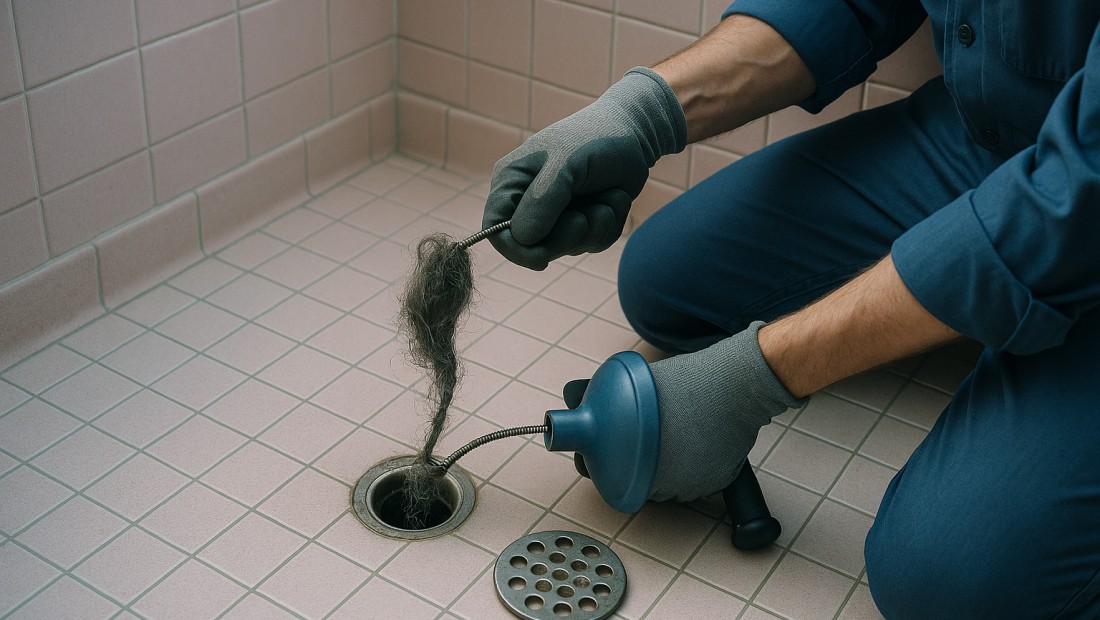
Standing ankle-deep in shower water is a daily annoyance that creeps up so gradually most people don't notice until it's bad. Bathroom drains — the shower, the tub, and the lavatory sink — clog differently than the kitchen. Instead of grease, the culprit here is a stubborn mat of hair bound together with soap scum, skin cells, and hard-water mineral buildup.
Albany's water and its old housing stock both play a role. Many homes have original fixtures and narrow pipe, and the region's moderately hard water leaves a scale that gives hair and soap something to cling to. The result is the classic slow shower drain that gets worse every month.
What clogs bathroom drains
- Hair — the single biggest cause in showers and tubs; it weaves into a dense mat at the drain and down the trap.
- Soap scum — bar soap especially reacts with minerals to form a hard residue that coats the pipe and binds the hair.
- Toothpaste and product — in sink drains, these add up alongside hair from shaving.
- Hard-water scale — mineral buildup narrows the pipe and roughens the wall.
Why plunging often fails here
A plunger can shift a fresh clog, but a hair-and-soap mat is fibrous and grips the pipe wall — the pressure pushes water past it without pulling it free. And in a tub or shower, you have to seal the overflow opening or the plunger just moves air. We physically remove the mat with the right tool rather than hoping pressure breaks it up.
How we clear it
- Pull and clean the stopper. Pop-up stoppers and strainers catch enormous amounts of hair; clearing them sometimes solves it outright.
- Remove the mat from the trap. We pull the hair-and-soap clog from the trap and trap arm rather than just punching through it.
- Cable the branch if needed. If the clog is deeper, a small cable clears the shower or tub branch line.
- Confirm flow. We test the drain and check that nearby fixtures aren't involved — a sign of a shared branch problem.
The chemical-cleaner trap
Liquid drain cleaners are especially tempting for a slow shower, but they're a poor fix. They sit in the standing water above a hair mat without dissolving it, generate heat that can damage old pipe and fixtures, and leave a caustic pool that's dangerous when we come to clear the drain mechanically. They also do nothing for the scale and soap lining the pipe.
Preventing the slow shower
- Use a quality hair strainer over every shower and tub drain — empty it regularly.
- Switch from bar soap to a liquid body wash to cut soap-scum buildup.
- Flush drains weekly with hot water to keep soap and product moving.
- Pull and clean pop-up stoppers every month or two.
A slow bathroom drain is one of the easiest problems to fix and one of the most annoying to live with. If yours is creeping toward standing water, we'll clear it quickly and leave you with a drain that runs like new. If several fixtures are slow at once, see our notes on multiple drains backing up — the real problem may be downstream.