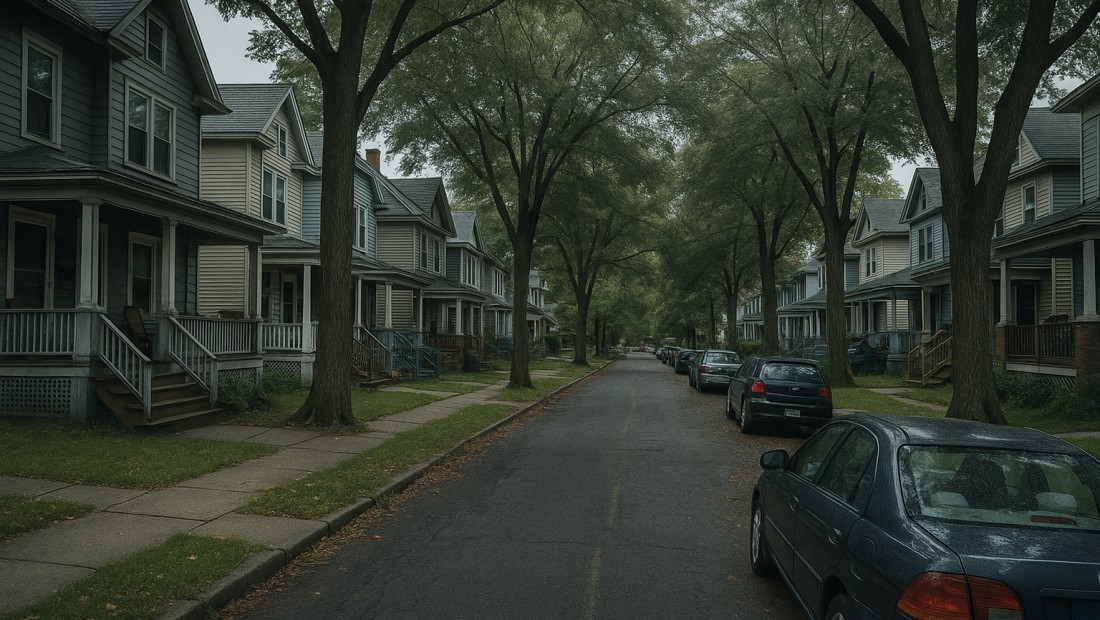
Pine Hills is one of Albany's largest and most lived-in neighborhoods, stretching from the edge of downtown out toward the universities. Its housing stock is mostly early-twentieth-century — two-family homes, sturdy single-families, and a heavy share of converted student rentals clustered around Madison and Western Avenues. That mix shapes the drain problems we see here more than anything else.
The homes are old enough to have original or first-replacement drain lines — clay tile to the street, cast iron and galvanized inside — and many are used hard. A house built for one family in 1915 that now holds four or five students puts several times the original load on the same kitchen drain, the same stack, and the same lateral.
What we see in Pine Hills
- Overloaded kitchen lines: shared student kitchens see heavy grease and food waste, and the early-1900s branch lines clog faster than newer pipe.
- Root intrusion in clay laterals: the neighborhood's big street trees push roots into aging clay sewer joints.
- Recurring clogs from hard use: high-occupancy rentals see the same drains back up again and again when the underlying line never gets properly cleaned.
- Cast-iron stack scaling: interior waste stacks in these homes narrow with scale over the decades.
- Basement backups: like most Albany homes these have basements, so a main-line problem shows first at the basement floor drain.
Breaking the recurring-clog cycle
The most common Pine Hills call is the drain that keeps coming back. A cable bores a hole through a grease-and-debris blockage and water flows again — for a few weeks, until the narrowed pipe closes back up. The fix for a recurring clog is to clean the pipe wall, not just punch through it.
- Find the real cause. A camera shows whether it's grease buildup, roots, a belly in the line, or a failing section.
- Clean, don't just bore. Where it's grease and scale, hydro jetting scours the full diameter so the line drains like new.
- Address roots. For root-driven backups we remove the roots and recommend a realistic re-service interval.
- Plan the lateral. If old clay is failing, we lay out repair options before the next emergency.
Winter in Pine Hills
Lightly heated student rentals over winter break are a classic setup for frozen drains and vent stacks. A vacant unit with the heat turned low, an exterior wall with original insulation, and a week of single-digit Albany nights is all it takes. We handle frozen-line calls through the cold months and can advise owners on keeping units safe while they're empty.
Fast, honest service near the universities
We're in Pine Hills constantly, and we understand its homes — the early-1900s framing, the converted rentals, the old clay running out under the maples. We carry the equipment to clear a hard-used kitchen line or a root-choked lateral, we camera-inspect so you know what's really going on, and we hold New York master-plumber licensing. For owners juggling tenants, we give a straight answer on whether a line needs cleaning, jetting, or repair — so you're not paying for the same backup twice.
Call 518-818-6837 or request a free quote for any Pine Hills address.