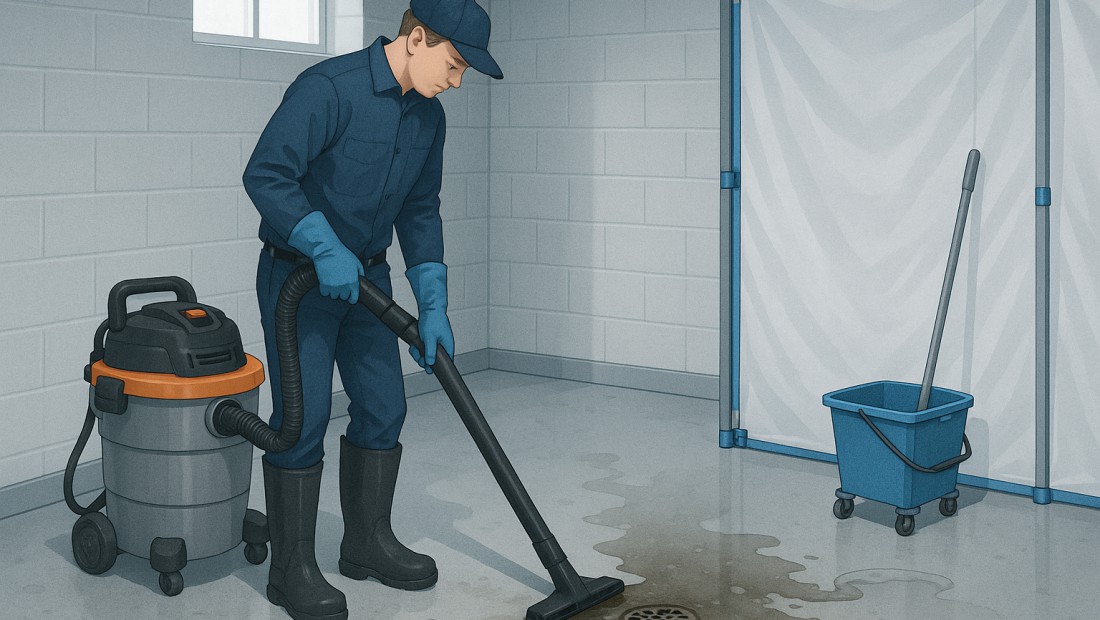
Few plumbing problems are as alarming — or as unhealthy — as raw sewage coming back up into the house. In the Capital Region it almost always appears first at the basement floor drain or the lowest tub, because those are the bottom of the system. The water may be gray from a kitchen or laundry line, or dark and foul from the sewer lateral. Either way, the response is the same: stop using water, keep people and pets away from the affected area, and get the line cleared before you attempt any cleanup.
Why sewage comes back up in Albany homes
A backup means wastewater can't leave the house through the sewer lateral, so it takes the path of least resistance — up through the lowest drain. The common causes here are specific to our region:
- Tree-root intrusion in old clay or cast-iron laterals under Albany's mature street trees.
- Collapsed Orangeburg pipe in homes built between the 1940s and early 1970s in the suburbs.
- Combined-sewer surcharge — parts of Albany, Troy, and Cohoes share storm and sanitary lines, so a heavy rain or rapid snowmelt can overwhelm the public main and push water back toward homes.
- Grease and flushed wipes building a dam in the lateral over time.
- Frost and pipe shift opening joints during the freeze-thaw season.
Our process
- Stop the source. We locate and clear the blockage in the lateral so no more wastewater enters the home.
- Assess the cause. Once flow is restored, a camera inspection tells us whether this was a one-time clog or a structural problem like roots or collapsed pipe.
- Guide safe cleanup. We advise on what can be saved, what must go, and how to disinfect, and we coordinate with restoration specialists for larger losses.
- Prevent the next one. Depending on the cause we recommend jetting, root treatment, a backwater valve, or a pipe repair so it doesn't happen again.
The role of a backwater valve
For homes that have backed up before — especially low-lying properties near the Hudson or on combined-sewer streets — a backwater valve is worth discussing. It is a one-way gate installed in the lateral that lets wastewater out but closes if the public main surcharges and tries to push water back in. It is not right for every home, and it needs occasional maintenance, but where the risk is real it can save a finished basement.
Insurance and documentation
Sewer backups are often covered by a specific rider rather than a standard homeowner's policy, so check before you assume. We document the cause and the work in writing, which helps with claims. Photograph the damage before cleanup begins and keep receipts for any discarded items. We're glad to provide a clear, itemized invoice that describes exactly what failed and what we did.
After the cleanup
Once the immediate mess is handled, the question is whether it will recur. A backup caused by a single flushed object is unlikely to return. One caused by roots, a pipe belly, or aging Orangeburg almost certainly will, on its own schedule. We'd rather tell you the truth and let you plan a repair or maintenance than have you live in fear of the next storm. If you're not sure what you're dealing with, a one-time camera inspection is the cheapest way to find out.